



Simple Steps to Turn Academic Failure into Success
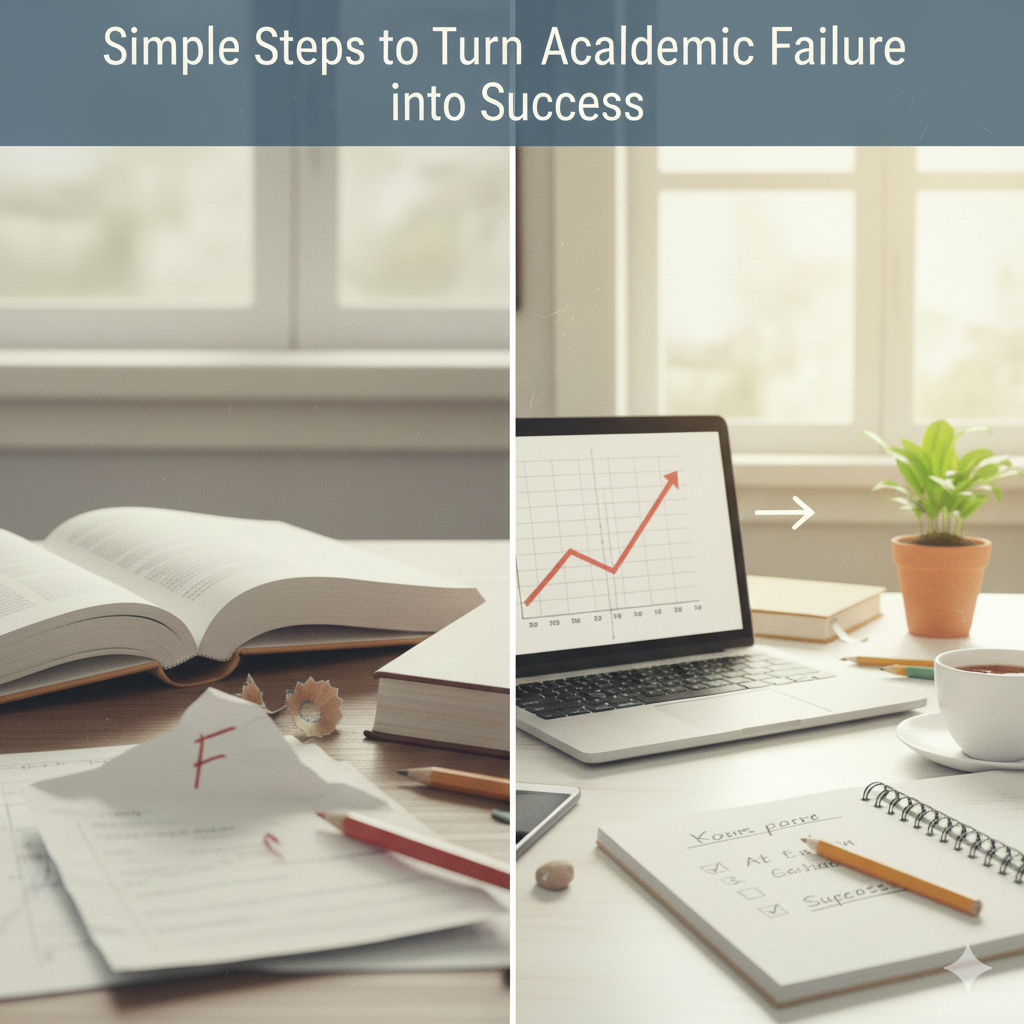
Introduction: When Academic Failure Feels Overwhelming
The email arrived late. Maybe the results slipped out quietly. Seeing that low grade is devastating. Your heart sinks quickly. Feelings of shame emerge. You might feel totally lost. This feeling is heavy. It is a moment of crisis. Many students feel this pain. You are absolutely not alone here. But this moment is not the end. It is a powerful turning point instead. This is about overcoming academic failure. We will find simple steps forward. I promise you can improve now. Schools that track student performance early can address academic failure before it escalates.
Understanding Why I Failed Academically
True success needs honest reflection. You must identify the root cause. This is not about blaming yourself. It is about careful analysis.
Common Reasons for Poor Performance
- My effort was simply misplaced. I studied hard, but studied incorrectly.
- Procrastination often took over. I started important tasks too late.
- My study methods were outdated. Rereading notes is often passive.
- I avoided seeking timely help. I struggled alone for too long.
- Outside stress felt too large. Personal issues affected my focus greatly.
- I lacked solid foundational knowledge. Past gaps have emerged suddenly now.
- Finding the why is the first step. It guides your academic improvement plan.
The Real Cost of Ignoring Failure
- Unresolved failure causes stress. It damages your self-esteem quickly.
- It often leads to quitting early. You might drop out unnecessarily.
- Your potential remains unmet. This is a huge, sad waste now.
- We must embrace learning from academic failure. It is essential for growth.
Changing My Mindset About Failure
Failure is truly just information. It is feedback on your current method and is never a final verdict on your worth.
Adopting a Student Growth Mindset
- Believe effort changes ability. Your brain is fully plastic now.
- See challenges as opportunities. Hard work builds your true intelligence.
- View failure as temporary. It is a moment, not an identity.
- Focus on process, not just talent. Hard work beats talent every day.
- This student growth mindset powers huge transformation.
- It is crucial for building academic confidence.
How to Convert Failure Into Success
- Acknowledge the pain quickly. Allow yourself to mourn the loss first.
- Commit to a new path firmly. Decide right now to make a change.
- Identify one small mistake made. Focus on fixing just that one thing.
- Set tiny, manageable goals now. Small wins create big momentum later.
- This is the true process for turning failure into success.
7 Steps to Turn Academic Failure Into Success
This is your practical checklist now. Follow these steps meticulously. They form the core of academic comeback strategies.
- Conduct a Deep Failure Audit. Review the bad test thoroughly. Find where exactly you went wrong.
- Define the Specific New Goal. Do not just say “do better.” Aim for a specific letter grade.
- Create a New Time Budget. Schedule study time like a job now. Be realistic about your available hours.
- Find an Accountability Partner. A friend or tutor helps greatly. Share your new goals often.
- Change Your Study Method. Stop reading; start actively doing. Use retrieval practice always.
- Eliminate One Big Distraction. Put your phone away for focused blocks. Minimise social media use completely.
- Celebrate Small, Daily Wins. Finish your scheduled study session well. Acknowledge your small success daily.
Simple Steps I Took to Improve My Performance
I focused on efficient, not long, study time. Quality matters more than quantity. I had to improve my poor academic performance fast.
Mastering the Study Environment
- Designate a study-only space. Your bed is not a study area. Keep this place neat and tidy.
- Remove all visual clutter now. Distractions start with your eyes quickly.
- Use noise-cancelling headphones. Block out all external sounds completely.
- Study in 45-minute blocks only. Use short breaks every time after.
- This focused environment boosts efficiency. It is vital for the steps to academic success.
How to Get Over Academic Failure
- Stop comparing your journey. Your path is totally unique nowadays.
- Forgive yourself quickly now. Self-blame drains your energy greatly.
- Focus on the next task only. Yesterday’s grade is already gone.
- Engage in healthy self-talk. Encourage yourself with kind words.
- This helps shift your perspective. It is crucial for student motivation after failure.
Study Habits That Actually Helped Me
I needed habits that forced me to think. Passive learning must stop immediately. These are true study habits for struggling students.
Active Recall and Practice Testing
- Flashcards are your best tool. Use them for key definitions.
- Close your book immediately. Try to recite information freely.
- Do every practice problem set. Practice tests mimic the exam pressure.
- Explain the concept aloud well. Teach it to an imaginary friend.
- The act of retrieval builds memory. This is the secret to deep learning.
The Feynman Technique
- Explain the topic simply first. Use language a child would grasp.
- Identify your weak points quickly. Where do your explanations fail?
- Go back and review those gaps. Fill the knowledge holes completely.
- Simplify the explanation again. Repeat this cycle until it is clear.
- This powerful method ensures mastery and helps with overcoming academic failure.
How I Stayed Motivated After Failure
Motivation is not a constant feeling. It is a result of effective action. You must work to feel motivated later.
The Power of Visualisation
- Imagine the successful outcome. See the passing grade clearly now.
- Picture the relief you will feel. Focus on that positive emotion greatly.
- Keep your goals visible always. Write them down and post them up high.
- This future-pacing builds internal drive.
How to Become a Top 1% Student
- The best students use systems. They do not rely on luck or pure mood.
- They review material constantly. Spaced repetition is a key method.
- They seek out quality feedback. They actively learn from every critique.
- They value health and sleep too. Rest is part of their study plan now.
- Achieving top scores is systematic. It requires consistent, high-quality effort.
Getting Help Without Feeling Ashamed
Asking for help is a sign of great strength. It shows deep commitment to growth. Do not let pride stop progress now.
Utilising Campus Resources
- Visit the professor’s office hours. Go with specific questions ready.
- Check the campus writing center. Get help with essays and papers.
- Use free peer tutoring services. Learning from peers is often easier.
- Talk to your academic advisor. They can help adjust your course load well.
- This external support speeds up overcoming academic failure greatly.
How to Handle Success and Failure
- Success is not permanent either. Keep working hard even when winning.
- Failure is not final either. Use it to guide your next action easily.
- Maintain a balanced perspective. Neither extreme defines your whole life.
- Be humble in all your dealings. Focus on learning every single day.
- Remember, turning failure into success is a continuous cycle.
Conclusion: My Failure Was the Beginning, Not the End
That low grade felt like a true ending. Instead, it was a loud beginning. It forced the needed big changes. I found better exam failure recovery tips, developed stronger habits, and learned the power of the growth mindset. Your failure is also a gift now. It is a clear map to better methods. Take action on your academic improvement plan. You have the power to change everything. Start taking these small steps today. Complete school automation empowers schools to drive long-term academic success.
FAQs: Actionable Advice After the Setback
1. How quickly can I see results after a failure?
- Start seeing small results quickly.
- Full grade recovery takes time.
- Be patient for one full semester.
2. What is the most important part of an academic comeback?
- It is changing your study method.
- Stop just reading passively now.
- Practice active recall constantly.
3. Is it too late to improve poor academic performance?
- It is absolutely never too late now.
- Commit to the new plan now.
- Consistent effort always pays off.
4. Where can I find effective academic comeback strategies?
- Review this seven-step plan now.
- Focus on time management first.
- Then master active recall easily.